Get the next document by email
One new document a month on AI adoption inside engineering teams.
 Note / 2026-10-12
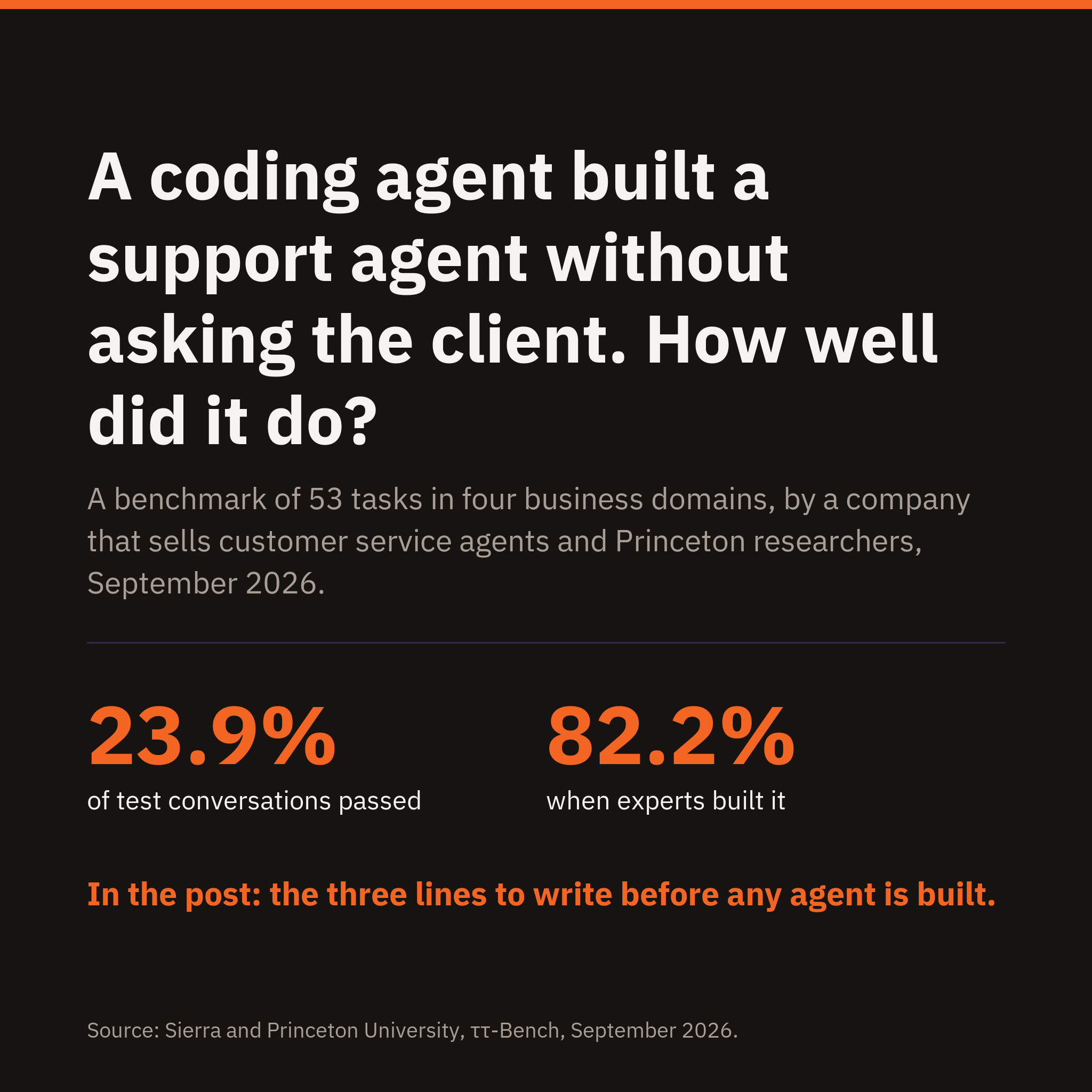
A coding agent that builds a customer service agent passes 23.9% of test conversations, and experts reach 82.2%
Sierra and Princeton researchers gave a coding agent a business's records, a client, a production API and a codebase. It shipped the first design that ran and asked the client almost nothing. The gap is the interview.
For CTOs and engineering leads deciding how to build an AI agent for a client or for their own operationRead the note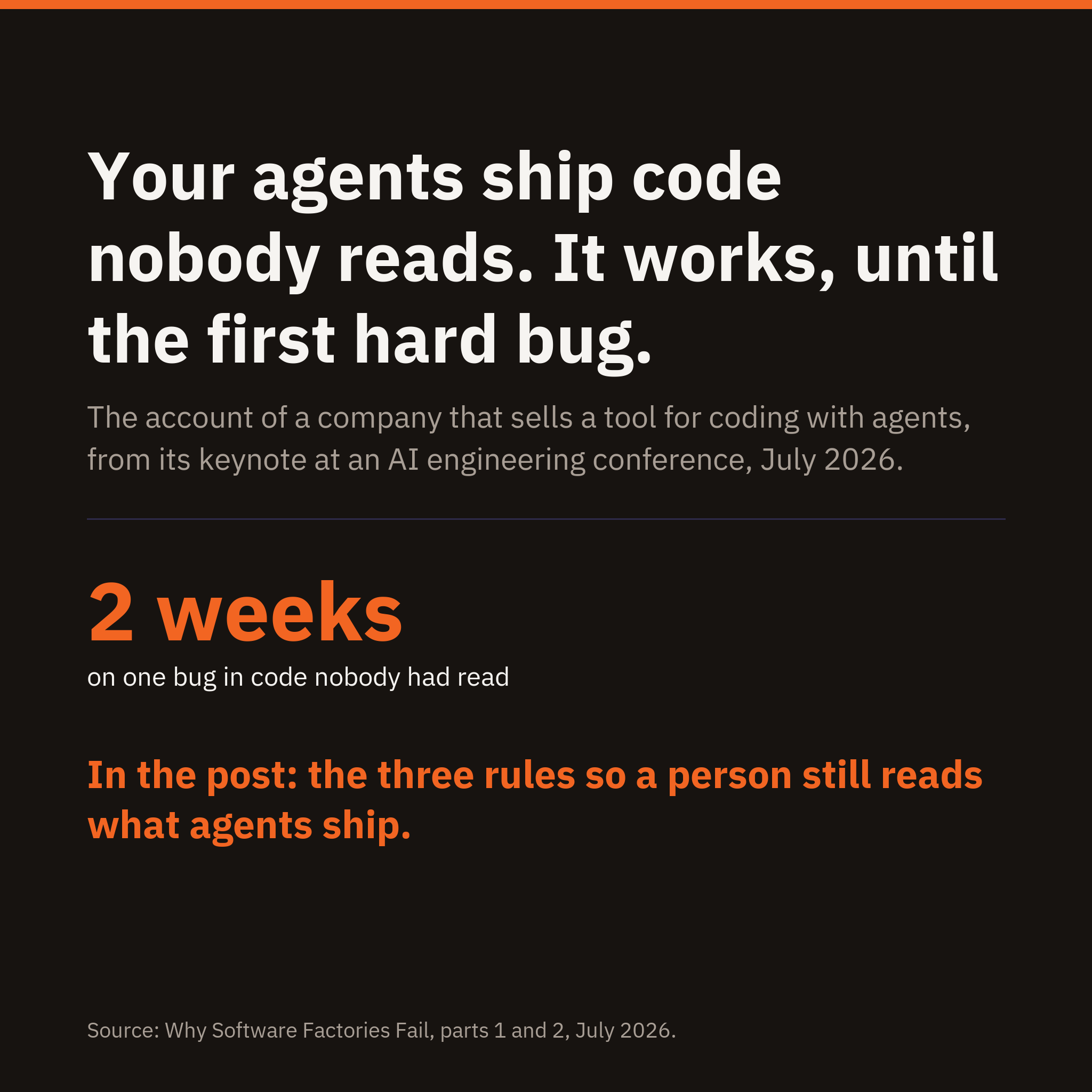 Note / 2026-10-12
A software factory that ran with the lights off left code nobody could explain in four months, and the fix was reading again
One company let agents ship small and medium work unread from July 2025. The first hard bug cost two weeks, and by November it rewrote from scratch. Its correction: a short written design, then slices a person reads.
For CTOs running coding agents on a shared codebaseRead the note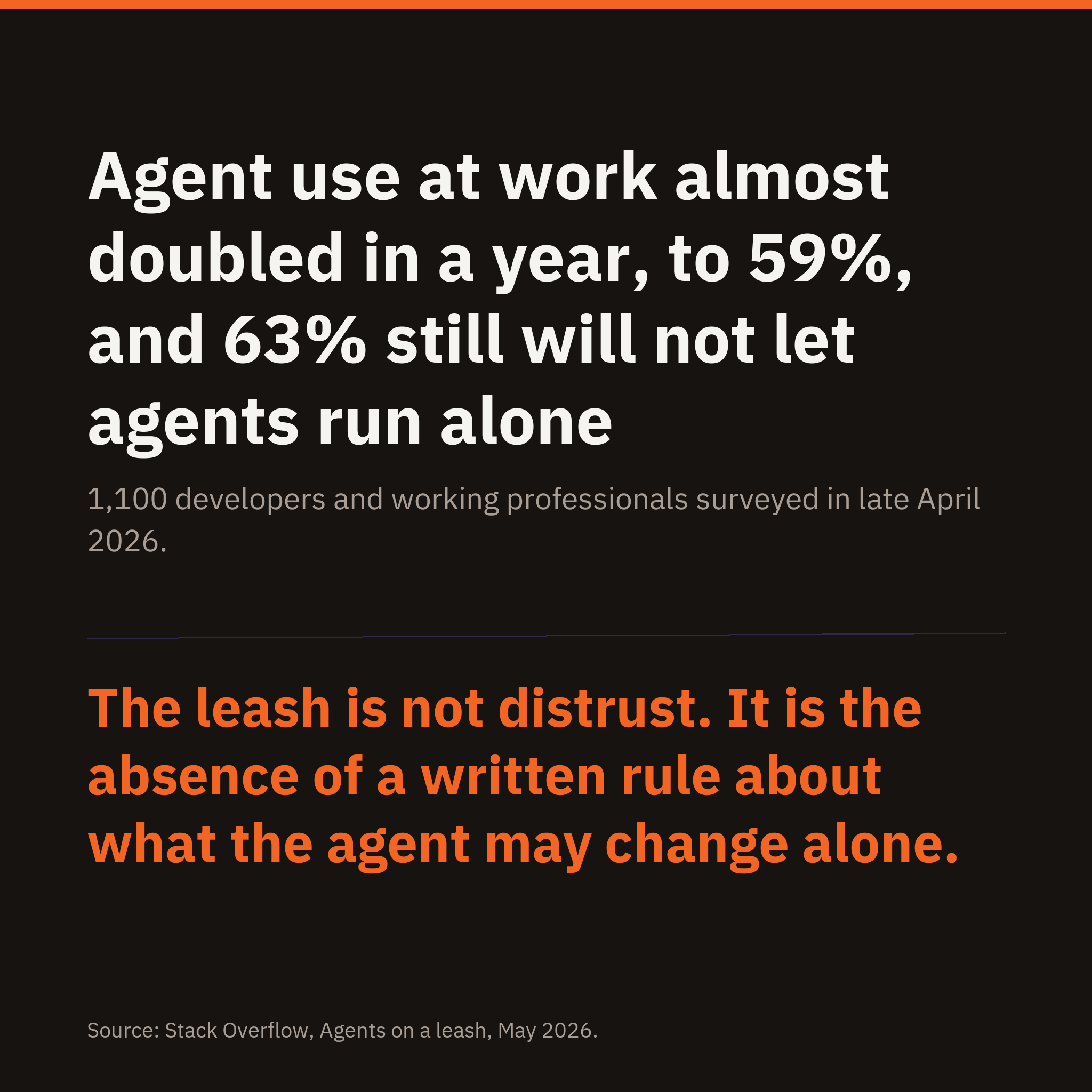 Note / 2026-10-04
Agent use at work almost doubled in a year, to 59%, and 63% still will not let agents run alone
59% of developers and working professionals use AI agents at work, against 31% in the 2025 Developer Survey, and 63% rarely or never let them run on autopilot. The leash is a missing written rule, not distrust.
For CTOs and engineering leads deciding what a coding agent may change without a person watchingRead the note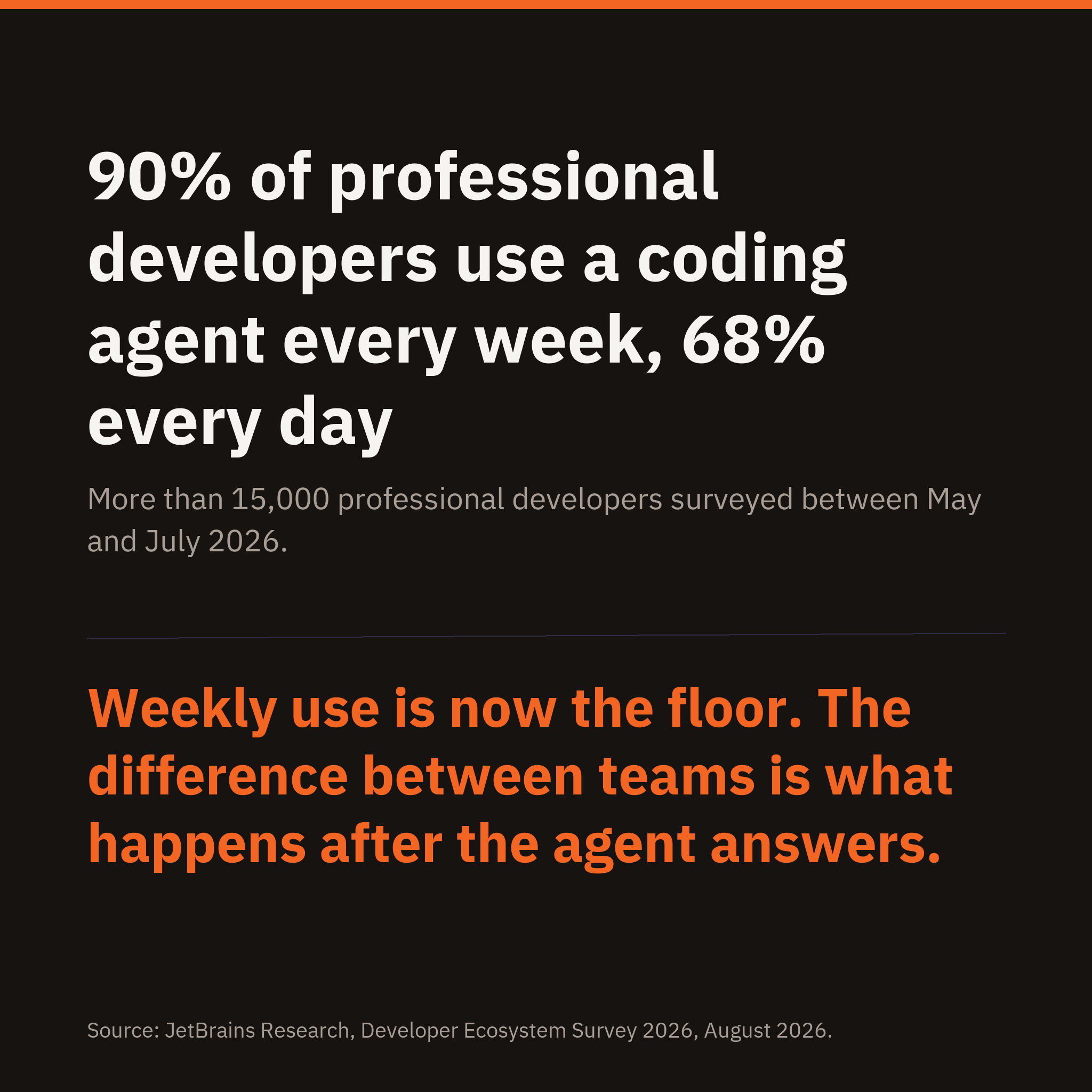 Note / 2026-10-02
Weekly use of coding agents reached 90% of professional developers, the difference between teams is what happens after the agent answers
The largest annual survey of developers puts weekly use of coding agents at 90% and daily use at 68%, from more than 15,000 professional developers surveyed between May and July 2026. Weekly use is now the floor.
For CTOs and engineering leads whose team already has the agent open and are deciding what comes nextRead the note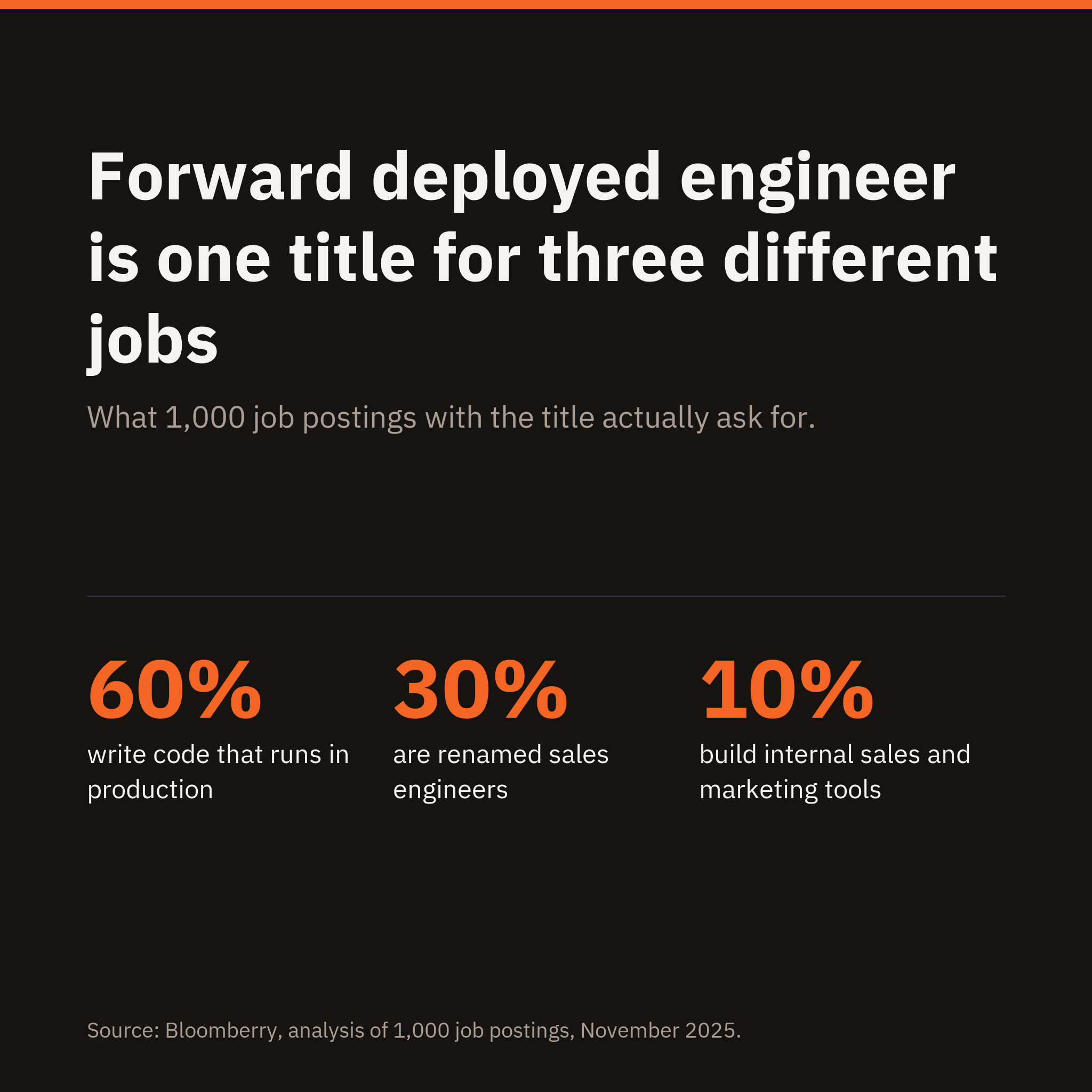 Note / 2026-09-30
Forward deployed engineer is one title for three different jobs
An analysis of 1,000 job postings with the title found three jobs under one name. 60% write production code inside a customer's systems, 30% are sales engineers with a new label, 10% build internal tools. Before hiring, the question is which job you need.
For CTOs and founders of SaaS companies deciding whether to hire or bring in a forward deployed engineerRead the note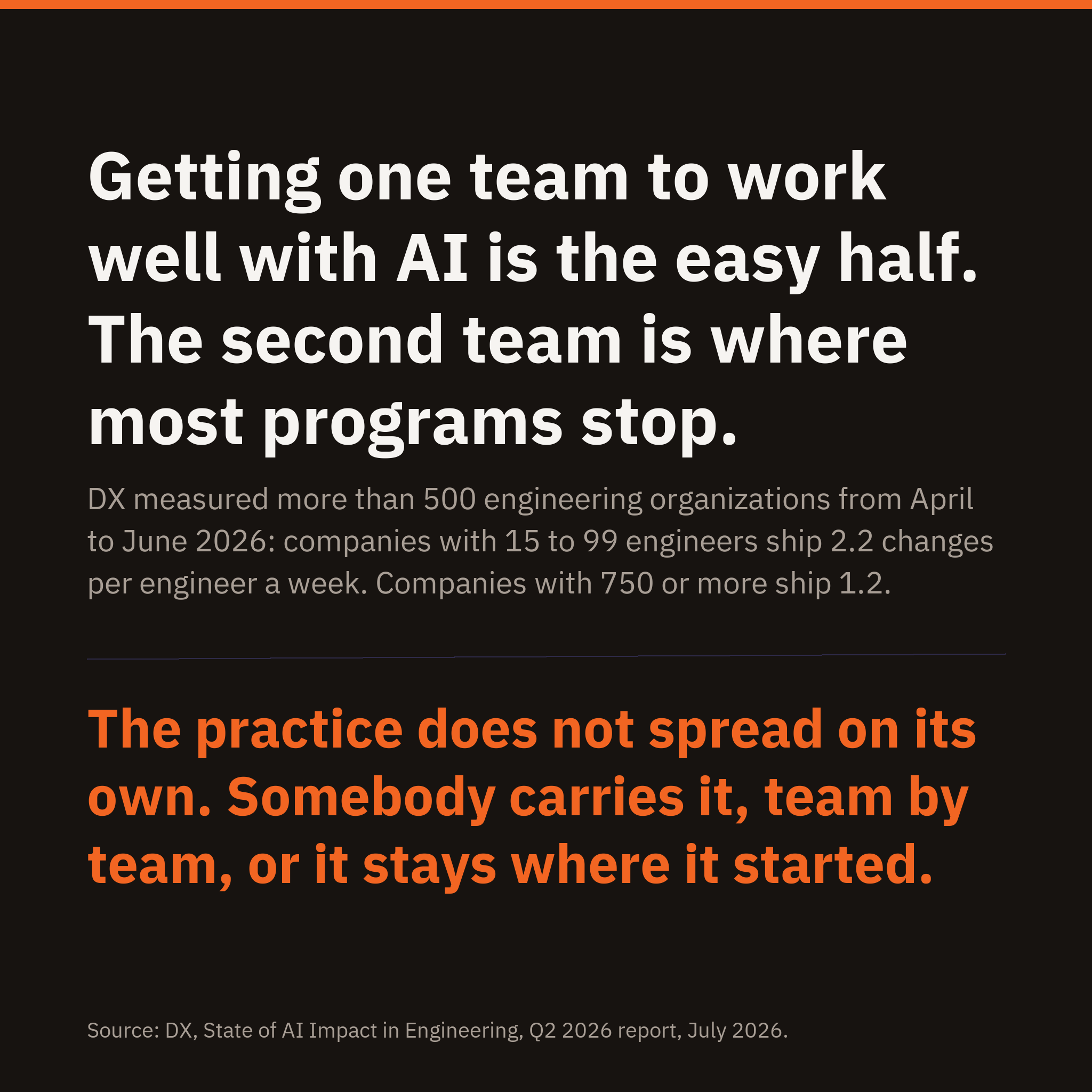 Note / 2026-09-16
Scaling AI past the first team: organizations with 15 to 99 engineers merge nearly twice as much per engineer
DX's quarterly report across more than 500 engineering organizations. Small organizations merge 2.2 pull requests per engineer per week against 1.2 at organizations of 750 or more, and while throughput rose 37% in four quarters, developer experience and change confidence fell.
For CTOs, VPs of Engineering and founders taking an AI practice from one team to the rest of the organizationRead the note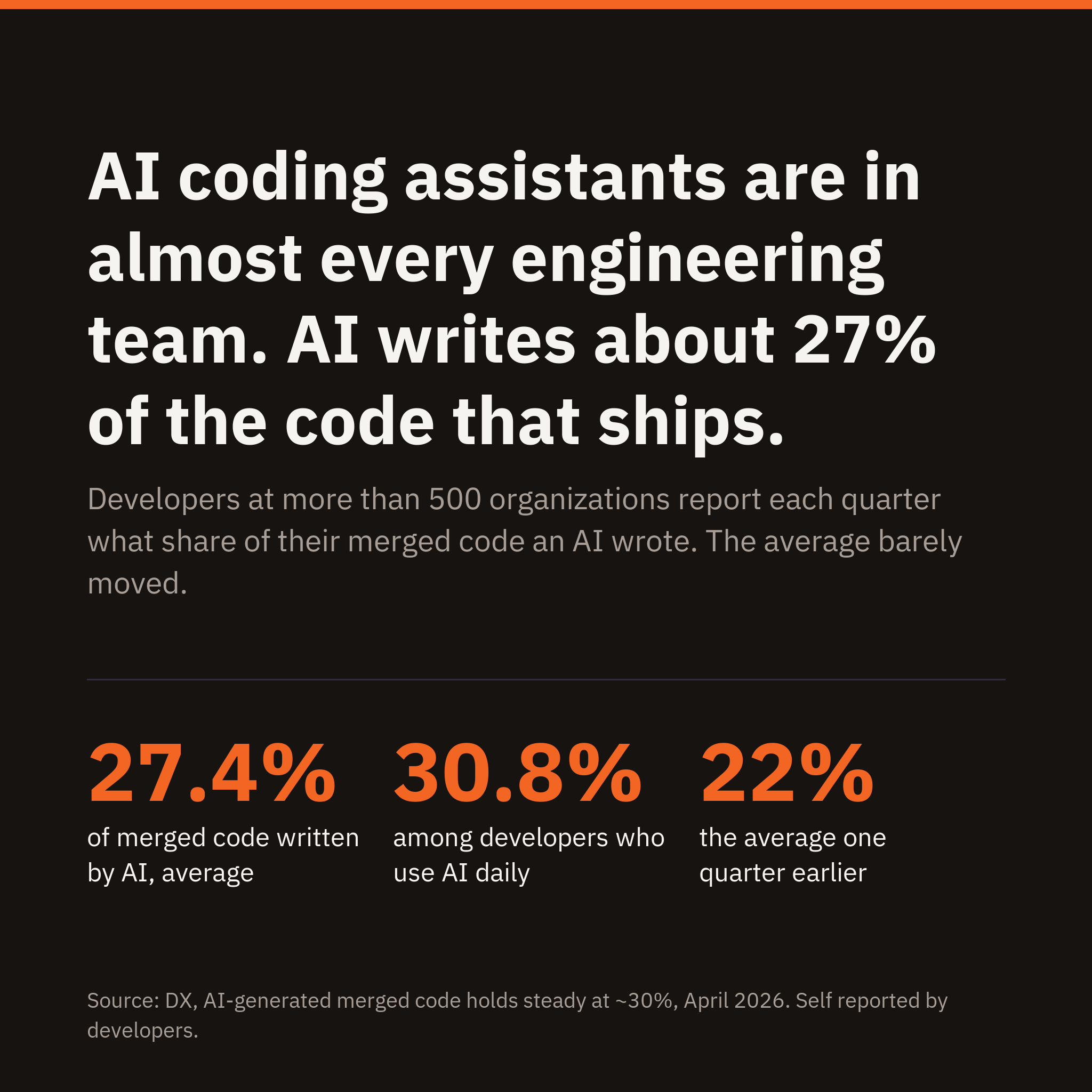 Note / 2026-09-15
AI coding assistants are in almost every engineering team, and write about 27% of the code that ships
Developers at more than 500 organizations report each quarter what share of their merged code an AI wrote. The average is 27.4%, and 30.8% among daily users. Adoption says who has a license; the merged share says who changed how they work.
For CTOs and engineering leads who report AI adoption to a boardRead the note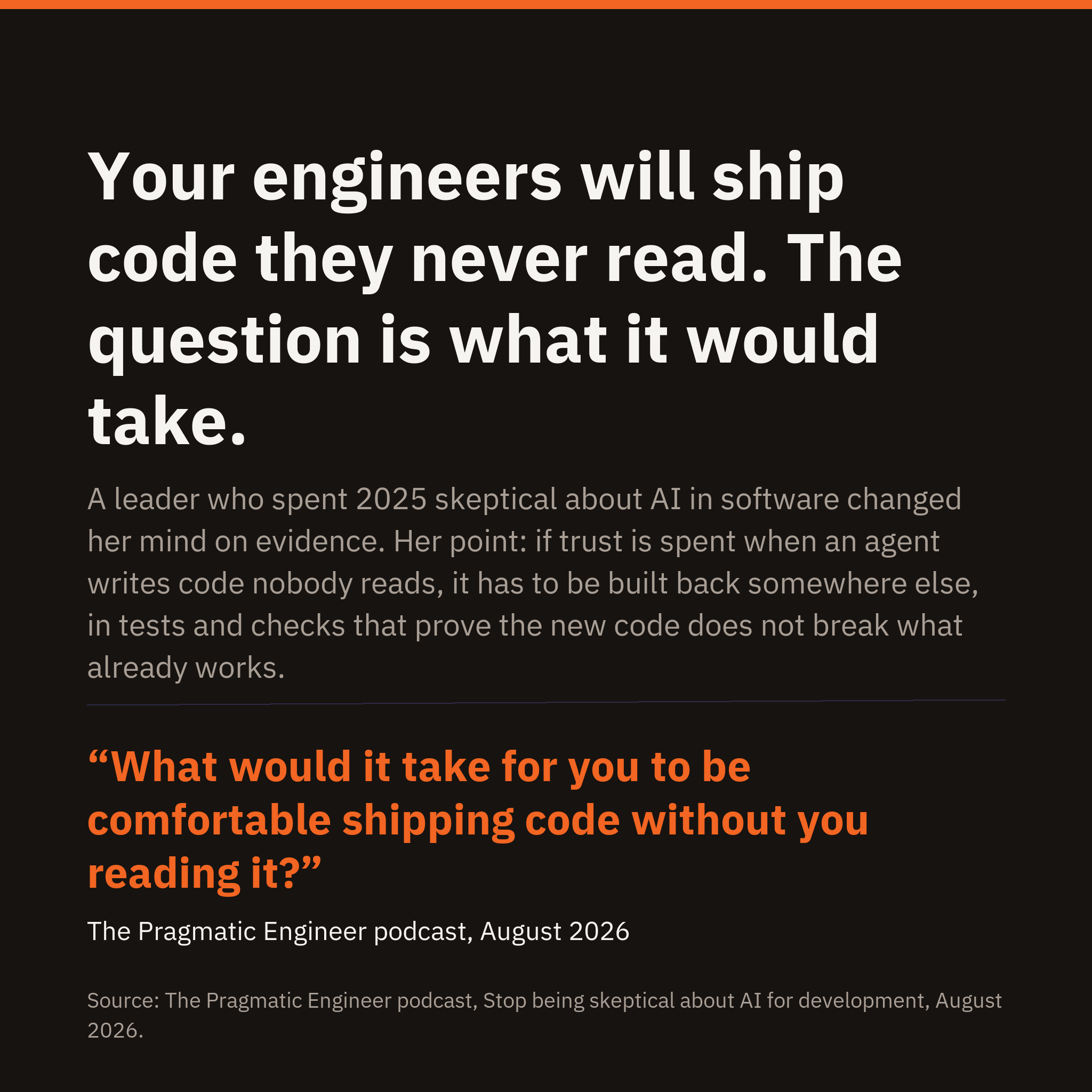 Note / 2026-09-15
AI in engineering teams, the people on call see the cost and the enthusiasts see the wins
Charity Majors, cofounder of Honeycomb, on why every engineering team has two camps about AI, why both are right, and why the line between them follows the on call rotation. What closed the gap in one client team was one page of shared numbers.
For CTOs and engineering leads whose team is split on AIRead the note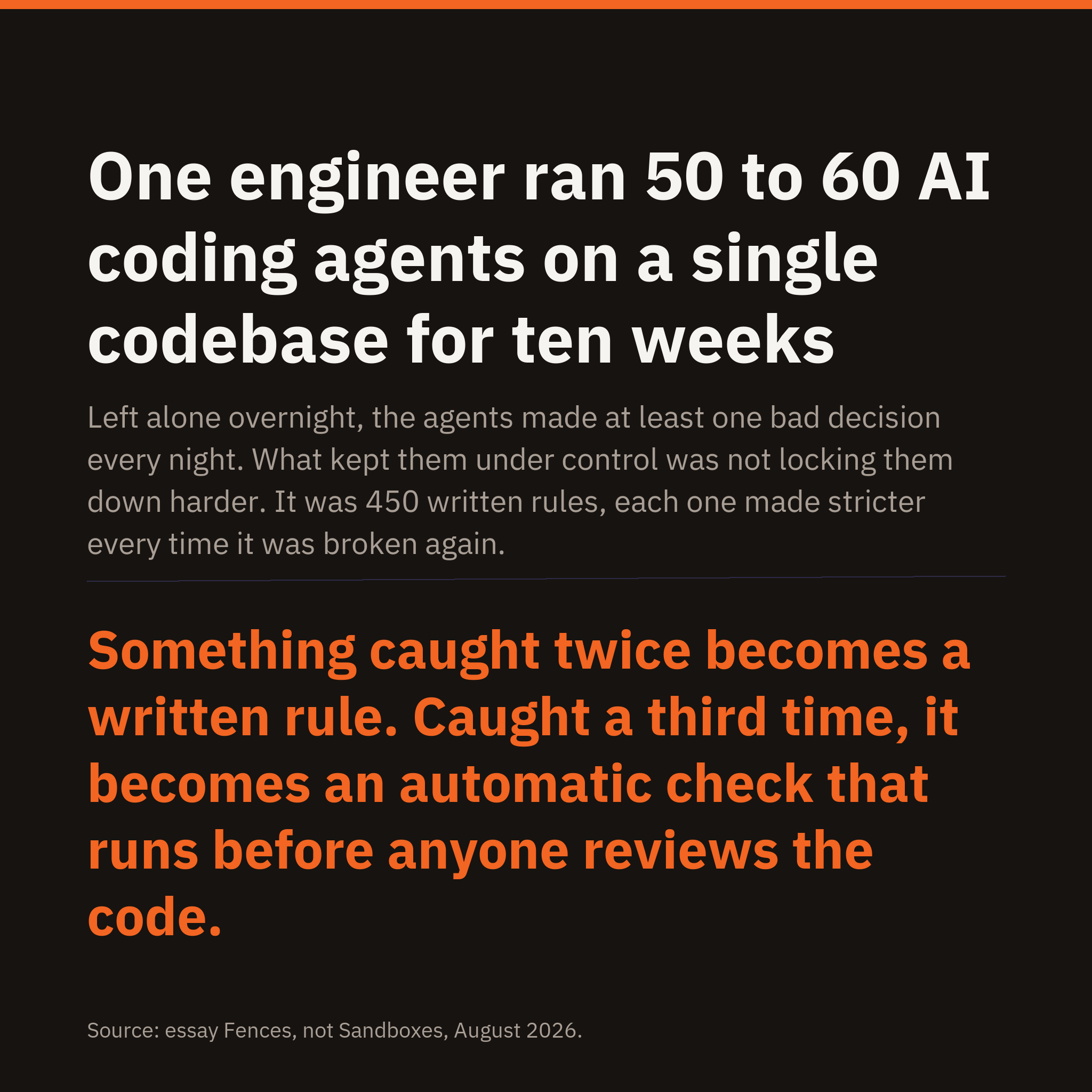 Note / 2026-09-15
Keeping AI coding agents in line, written rules that tighten rather than sandboxes
One engineer ran 50 to 60 AI coding agents on a single codebase and ended up with 450 written rules, over 100 of them fences. A fence is any mechanism that turns an agent away when it is not supposed to be there. Rules tighten each time they are broken again, until a program enforces them.
For CTOs and engineering leads deciding what coding agents may do in their repositoriesRead the note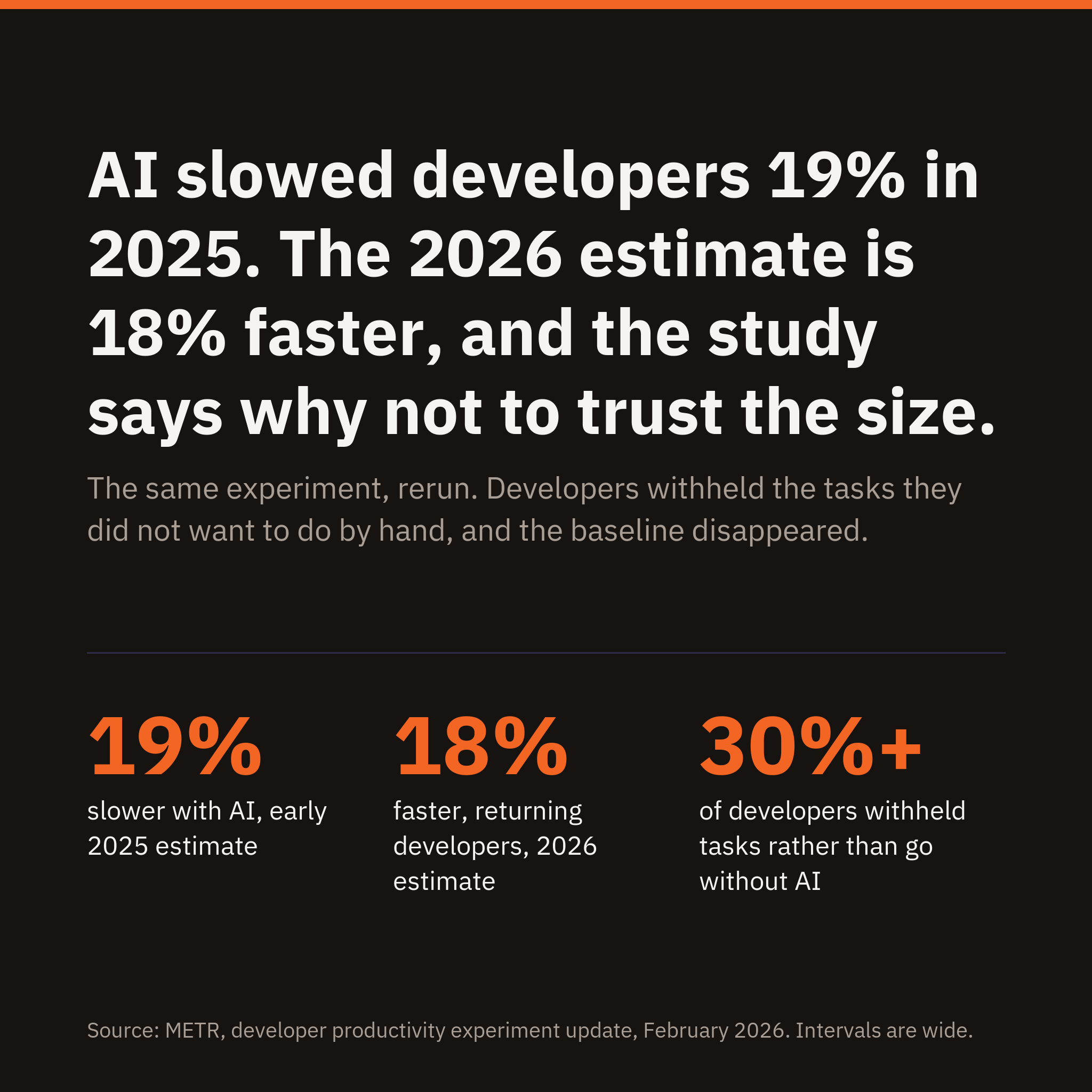 Note / 2026-09-11
Why a controlled study of AI productivity had to change its design
METR's February 2026 update lists four reasons its AI productivity experiment stopped working. Each one is what changes inside a team once agent adoption is real.
For CTOs and engineering leads measuring the effect of AI on their teamRead the note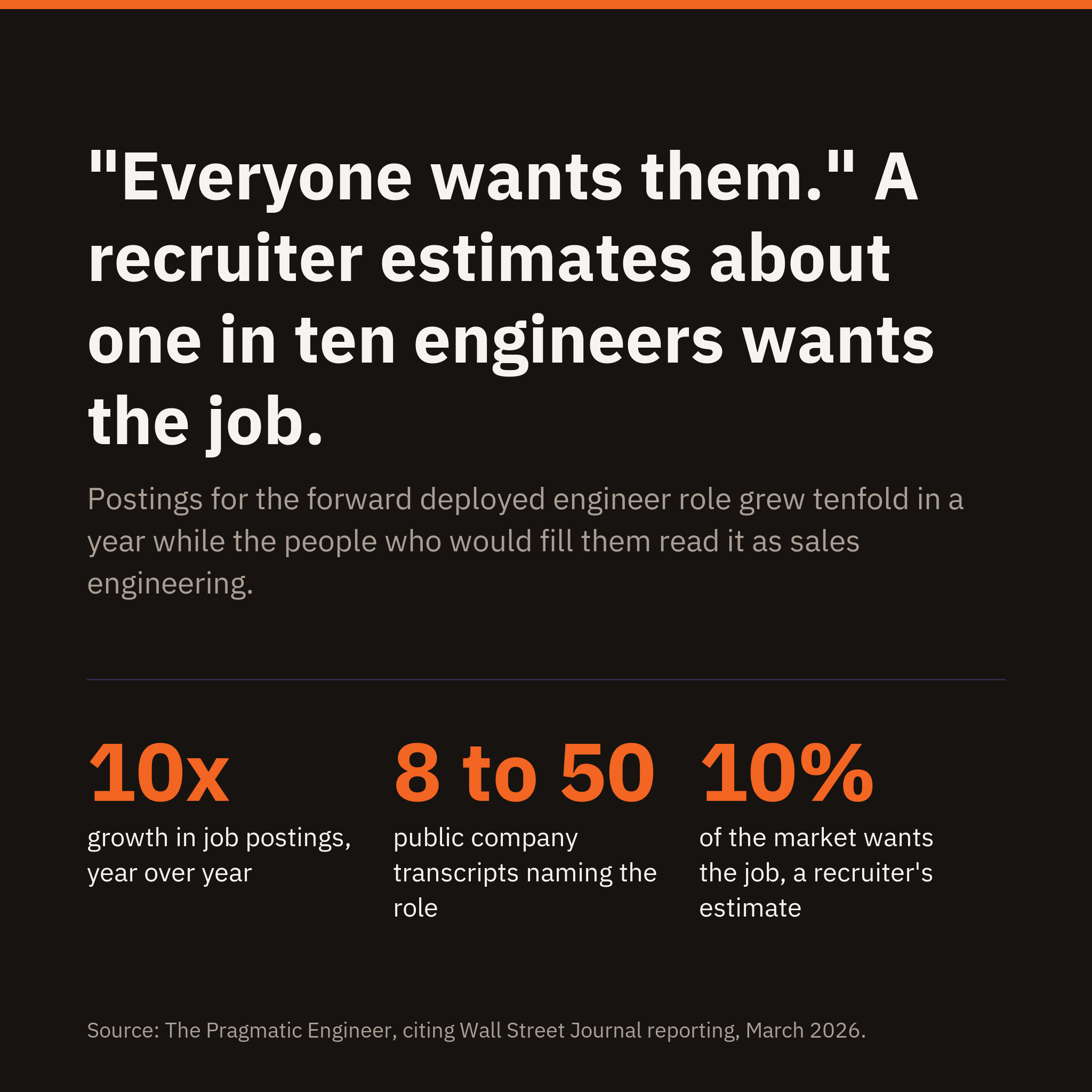 Note / 2026-09-11
The forward deployed engineer role is posted ten times more, and few engineers want it
Job postings for the forward deployed engineer role grew more than tenfold in a year and, by a recruiter's estimate, about one in ten engineers wants the job. The title is not the hard part; the test is.
For founders and engineering leaders hiring or defining the roleRead the note